
Date: March 7, 2026
Subject: Clarifying Water-Resistance vs. Waterproofing in Shearling Products
1. Executive Summary
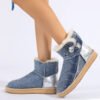
The primary appeal of double-face sheepskin (shearling) boots lies in their exceptional thermoregulation and comfort. However, a significant gap exists between consumer expectations and the material’s physical capabilities regarding water exposure. This report clarifies that while premium sheepskin boots are often treated to be water-resistant (repelling light moisture and stains), they are not waterproof in the same manner as rubber or synthetic Gore-Tex footwear. To maintain longevity and “easy-care” properties, regular application of hydrophobic sprays is mandatory.
2. The Anatomy of Double-Face Sheepskin
Double-face sheepskin is a singular layer of hide with the wool still attached. Unlike traditional leather shoes, which may have multiple synthetic linings, shearling is highly porous.
- Breathability vs. Barriers: The natural protein structure of wool allows for moisture wicking. According to research by CSIRO (Commonwealth Scientific and Industrial Research Organisation), wool can absorb up to 30% of its weight in moisture without feeling wet. However, this same porosity means that if submerged, the skin (suede side) will eventually saturate.
- The Suede Vulnerability: The exterior of most snow boots is “suede” or “nubuck” finished sheepskin. Without chemical treatment, suede is naturally hydrophilic (water-attracting).
3. “Water-Resistant” vs. “Waterproof”: The Critical Distinction
The most frequent customer complaint stems from the misunderstanding of these two terms.
| Feature | Water-Resistant (Typical Sheepskin) | Waterproof (Rubber/Membrane) |
| Material | Treated Suede/Leather | Rubber or Sealed Membrane |
| Function | Repels light rain/snow | Submersible 100% |
| Maintenance | Requires regular re-treatment | Minimal maintenance |
| Breathability | High (Superior comfort) 高 | Low (Potential for sweat) |
Professional Insight: The Leather Panel (International Leather Magazine) notes that applying a “waterproof” tag to a breathable natural material is technically a misnomer. Real sheepskin requires microscopic gaps to breathe; sealing these gaps permanently would ruin the texture and warmth of the boot.
4. The Science of DWR (Durable Water Repellent) / DWR
Modern snow boots are treated with a DWR finish during the tanning process. This treatment increases the contact angle of water droplets.
θc > 90°
When the contact angle θc is high, water “beads up” and rolls off rather than soaking into the fibers. However, mechanical friction (walking through slush) and environmental exposure (salt and dirt) erode this chemical layer over time.
5. Why Regular Maintenance is Mandatory
The “Easy-Care” promise of sheepskin is contingent upon the user maintaining the protective barrier.
- Salt and Chemical Erosion: Winter roads are often treated with calcium chloride. These salts can leach the natural oils from the sheepskin, leading to cracking. A fresh layer of water repellent acts as a sacrificial barrier.
- Stain Prevention: Water-repellent sprays are also oleophobic (oil-repelling). This prevents mud and oil-based stains from setting into the delicate suede fibers.
6. Recommended Care Protocol
To ensure the boots remain “easy to clean,” users should follow the LWG (Leather Working Group) gold standards for suede care:
- Pre-use Treatment: Spray before the first wear.
- The 5-Wear Rule: In heavy snow conditions, re-apply repellent every 5–10 wears.
- Drying Logic: Never dry near a direct heat source (radiator). This causes the collagen fibers in the skin to shrink and harden.
7. References and External Research
For further technical reading, please refer to the following authorities:
- Leather Working Group (LWG): Standards on leather durability and chemical treatments. https://www.leatherworkinggroup.com/
- SATRA Technology: Footwear testing for water resistance and thermal properties. https://www.satra.com/
- CSIRO Research on Wool Properties: Insights into the hydrophobic vs. hydrophilic nature of protein fibers. https://www.csiro.au/
- American Leather Chemists Association (ALCA): Journal entries regarding the exhaustion of DWR finishes on soft leathers. http://www.leatherchemists.org/
8. Conclusion
In conclusion, “water-resistant” sheepskin boots are designed for comfort and ease of maintenance, not for prolonged submersion. Marketing them as “waterproof” leads to product misuse and dissatisfaction. The longevity of the product is a partnership between the manufacturer’s tanning quality and the consumer’s commitment to regular repellent application.




You must be logged in to post a comment.