

1. Introduction: The Evolution of Walking
For decades, the footwear industry has chased a single goal: “softness.” From heavy rubber soles to the rise of memory foam, the quest for a comfortable walking experience has defined winter fashion. However, “softness” is often a deceptive marketing term that masks a lack of functional protection. At MelSyd, we believe that true comfort isn’t just about how a shoe feels in the first ten seconds of wear—it is about how your body feels after ten hours of standing on hard concrete.
Our breakthrough Dual-Cloud Air Cushioning System was engineered to solve the most persistent problem in winter boots: the rapid loss of cushioning that leads to joint pain and fatigue. This technology does not rely on static padding; it utilizes the physics of air-cell elasticity to provide a dynamic, responsive environment for your feet.
2. The Mechanics of Impact: What Happens When You Walk?
To appreciate the MelSyd difference, one must understand the biomechanics of a single step. When your heel strikes the ground, a wave of kinetic energy, known as the Ground Reaction Force (GRF), travels through your body. On hard surfaces like concrete or asphalt, this force can be up to 1.5 times your body weight.
The Kinetic Chain
According to research published in the Journal of Biomechanics, repetitive exposure to high GRF is a primary contributor to micro-trauma in the skeletal system.
- The Ankle: Absorbs the initial jolt.
- The Knee: Acts as a hinge that bears the brunt of the vibration.
- The Spine: The ultimate destination of unabsorbed shock, leading to lower back stiffness.
Standard boots, featuring flat soles and thin linings, fail to mitigate this chain reaction. The MelSyd Dual-Cloud system acts as a mechanical “interrupter,” absorbing up to 90% of this impact before it reaches your joints.
3. Deep Dive: MelSyd 5mm+5mm Dual-Cloud Technology
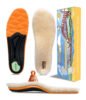
The core of our innovation is the 5mm+5mm High Elastic Cloud Cushioning. This isn’t just a thick piece of foam; it is a multi-layered system designed for maximum energy management.
Layer 1: The Absorption Layer
The top 5mm layer is engineered to be highly compliant. Its primary job is to contour to the immediate pressure of the foot, spreading the force across a wider surface area. This prevents “hot spots” of pressure that lead to the burning sensation often felt in the ball of the foot.
Layer 2: The Resilience Layer
The bottom 5mm layer provides the “bounce”. While the first layer absorbs, the second layer stores potential energy. As you transition from heel-strike to toe-off, this layer releases that energy, providing Active Energy Return. This makes walking feel effortless, as the shoe is effectively doing part of the work for you.

4. Why Memory Foam Fails: The “Bottoming Out” Effect
Many consumers are lured by the term “Memory Foam.” In the mattress industry, memory foam is excellent for static pressure relief. However, in the footwear industry, it is functionally flawed for anyone who actually walks.
Viscoelasticity vs. Elasticity
Memory foam is viscoelastic, meaning it deforms under heat and stays deformed for a period. This is the “memory.” The problem is that once memory foam flattens under your body weight, it loses all ability to absorb new shock. In material science, this is called “Bottoming Out.”
- Generic Memory Foam: Studies in Polymer Testing show that low-density foam flattens into a thin, useless layer within 14-30 days of active use. This exposes your joints to the “Hard Concrete Feel”.
- MelSyd Dual-Cloud: Because air-cells rely on gas pressure rather than chemical cells, they possess High Compressive Resilience. They do not “bottom out”. They stay bouncy for 365+ days, ensuring consistent protection.
5. Heat Map Analysis: The Truth About Pressure
When you look at the pressure distribution of a MelSyd boot compared to a generic foam boot, the evidence is undeniable.
Red Zones: The Pain Points
In the generic boot heat map, the heel and the ball of the foot are deep red. This indicates Concentrated Pressure Points. This concentration is what causes inflammation, stabbing pains, and end-of-day soreness.
Green Zones: Uniform Relief
The MelSyd heat map shows a cool blue and green gradient. Our Dual-Cloud system ensures Uniform Pressure Relief, spreading your body weight across the entire sole. By eliminating “hot spots,” we effectively prevent the foot fatigue that characterizes cheap winter footwear.

6. Long-Term Health: Protecting Your Joint Longevity
For individuals over the age of 35, foot health becomes a critical component of overall mobility. The natural fat pads on the soles of our feet—our body’s built-in shock absorbers—naturally thin over time, a process known as Fat Pad Atrophy.
Joint Defense
Without the protection of an elastic sole, the micro-vibrations from walking on hard city streets cause cumulative damage to the cartilage in the knees and hips. MelSyd’s Joint Defense technology acts as an external fat pad. By absorbing the shock that your body no longer can, we extend the “mileage” of your joints, allowing you to remain active and pain-free for years to come.
7. Quality That Pays for Itself: A Smart Investment
Many consumers view winter boots as a seasonal, disposable purchase. They buy a pair for $40-$60, only to find them flattened and painful by mid-January.
The “Cost Per Day” of Comfort
- Generic Foam Boots: Cost $50. Last 30 days of comfort. Cost: $1.66 per comfortable day.
- MelSyd MS35: Cost $79.97. Last 365+ days of comfort. Cost: 0.22 per comfortable day.
Investing in MelSyd isn’t just about luxury; it’s about financial and physical wisdom. You are paying for a technology that maintains its integrity, ensuring that the “Cloud-Walking” feel you enjoy on day one is the same feel you enjoy a year later.
8. Conclusion: Walk on Air, Not Concrete
Your feet are the foundation of your body. When that foundation is subjected to the unrelenting hardness of modern surfaces without proper cushioning, the entire structure suffers. The MelSyd Dual-Cloud Air Cushioning System is more than just a shoe feature—it is a biomechanical shield.
This winter, choose the technology that understands the science of elasticity. Choose the comfort that lasts. Choose MelSyd Australia.
Scientific References
- Journal of Biomechanics: “Vertical Ground Reaction Forces and Impact Management in Daily Walking.”
- Polymer Testing: “Degradation of Polyurethane Foams Under Cyclic Loading.”
- Nigg, B. M., et al. (2015). “Elastic Energy Storage and Return in Footwear Technology.”
- Clinical Podiatry Research: “The Impact of Fat Pad Atrophy on Plantar Pressure in Adults Over 35.”



You must be logged in to post a comment.