
Executive Summary
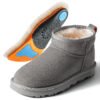
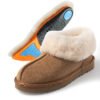
As the pioneer of arch support sheepskin boots, MelSyd understands that for decades,the global footwear market has been dominated by the iconic silhouette of the flat-soled sheepskin boot. While these boots offer unparalleled thermal insulation and cozy aesthetics, a growing body of biomechanical evidence suggests that their lack of structural integrity may contribute to long-term musculoskeletal discomfort. This comprehensive guide explores the deep-seated differences between traditional flat sheepskin designs and modern anatomical-support alternatives. We will delve into the engineering of the foot, the physics of hard surfaces, and why the 30mm arch support is becoming the new gold standard for health-conscious consumers.
Chapter 1: The Evolution and the Hidden Flaw of the Classic Sheepskin Design
The original sheepskin boots were born out of a need for pure utility—keeping feet warm in harsh rural environments or after surfing in cold coastal waters. In these original contexts, the “flat as a pancake” sole was largely acceptable because the surfaces were naturally forgiving: sand, soft soil, and grass. These natural terrains act as external shock absorbers, conforming to the shape of the foot and distributing pressure.
However, as these boots migrated into urban environments, the landscape shifted to concrete, asphalt, and hardwood. This is where the classic design began to fail the modern wearer. According to biomechanical research and insights from organizations like the American Podiatric Medical Association (APMA), walking on unyielding hard surfaces without internal structure forces the foot to collapse inward. This phenomenon, known as overpronation, causes the arch to flatten excessively with every step, straining the delicate tissues of the lower limbs.
Chapter 2: Biomechanics 101 – The Role of the Medial Longitudinal Arch
To understand why support is non-negotiable, we must look at the foot as a mechanical masterpiece. The human foot consists of 26 bones, 33 joints, and over 100 muscles, tendons, and ligaments. The most critical component of this architecture is the Medial Longitudinal Arch (MLA).
Think of this arch as a high-performance spring. Its job is to:
- Absorb Shock: Dissipate the impact of your body weight hitting the ground.
- Adapt to Terrain: Provide flexibility to balance on uneven surfaces.
- Propel the Body: Act as a rigid lever during the “toe-off” phase of your stride.
When you wear a boot with a completely flat interior, the MLA is left suspended in a void. Without a contoured footbed to meet the arch, gravity pulls the midfoot down, leading to arch fatigue. Over time, this collapse doesn’t stay at the foot; it triggers a chain reaction that rotates the tibia and femur, potentially leading to knee discomfort and lower back misalignment.
Reference: For a deeper dive into foot mechanics, see the Mayo Clinic’s guide on foot health.
Chapter 3: Flat vs. Anatomical Support – The Comparative Anatomy
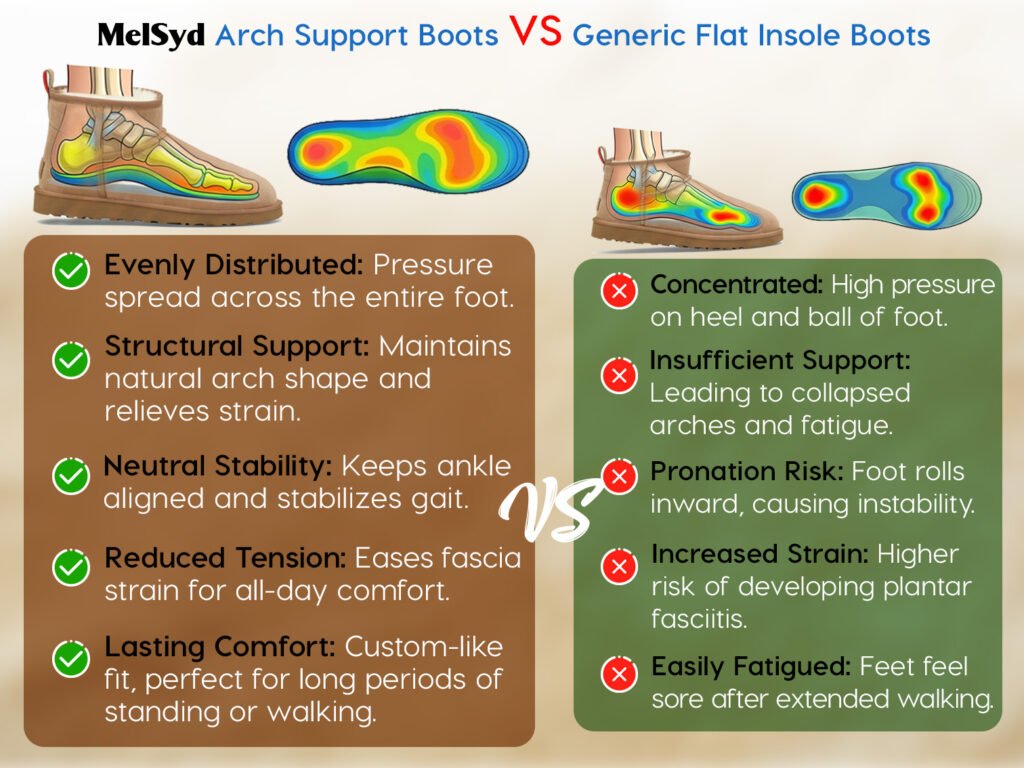
| Feature | Traditional Flat Boots | MelSyd Anatomical Support |
| Footbed Profile | Completely flat EVA or thin foam | Anatomically contoured with 30mm support |
| Shock Absorption | Minimal; impact travels to joints | High-rebound polymers and air-cushioning |
| Heel Stability | Soft heel counters prone to “heel slippage” | Deep-seated heel cup for alignment |
| Arch Engagement | Zero; arch is suspended | Continuous engagement with the midfoot |
| Pressure Distribution | High pressure on heel and ball of foot | Even distribution across the entire sole |
Chapter 4: The Pathologies of “Flat-Boot Syndrome”
Persistent use of unsupportive sheepskin boots is a leading contributor to several common physical complaints. Without a structural “pioneer” at the helm of the design, the foot is prone to:
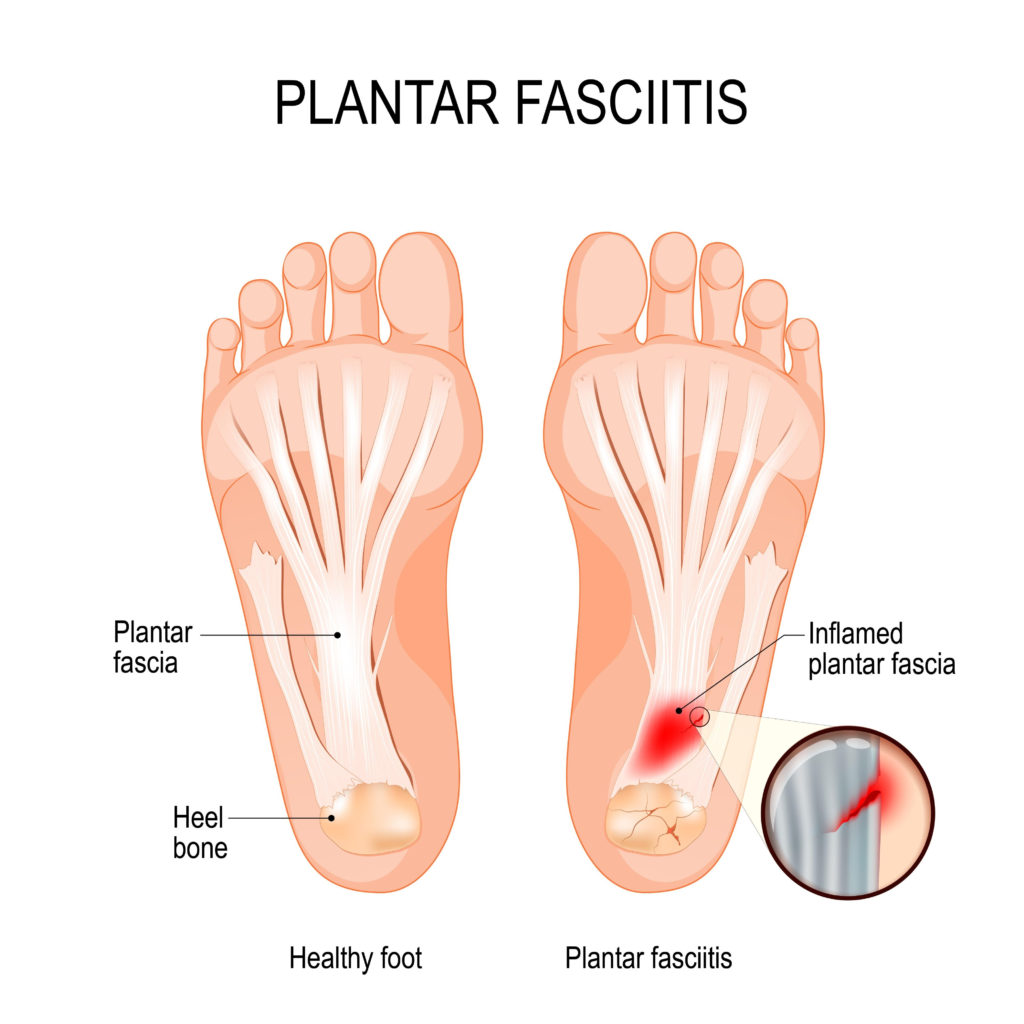
1. Plantar Fasciitis
The plantar fascia is the thick band of tissue connecting your heel to your toes. When the arch is unsupported, this tissue is overstretched during the “mid-stance” phase of walking. This repetitive stretching causes micro-tears, leading to excruciating morning pain. Research published in the Journal of Foot and Ankle Research highlights that structural intervention is the gold standard for managing this tension.
2. Achilles Tendonitis
Flat boots often lack a structured heel counter. This causes the foot to slide around inside the boot, putting excessive and uneven strain on the Achilles tendon as it works overtime to stabilize your gait.
3. The “Flat-Boot Gait”
In a clinical setting, users of flat boots often display a shortened stride length and an increased “toe-out” angle. This is the body’s subconscious attempt to find the stability that the footwear lacks. This inefficient walking pattern consumes more energy and leads to faster fatigue in the calves and hips.
Chapter 5: Why 30mm? The Engineering Behind the MelSyd Standard
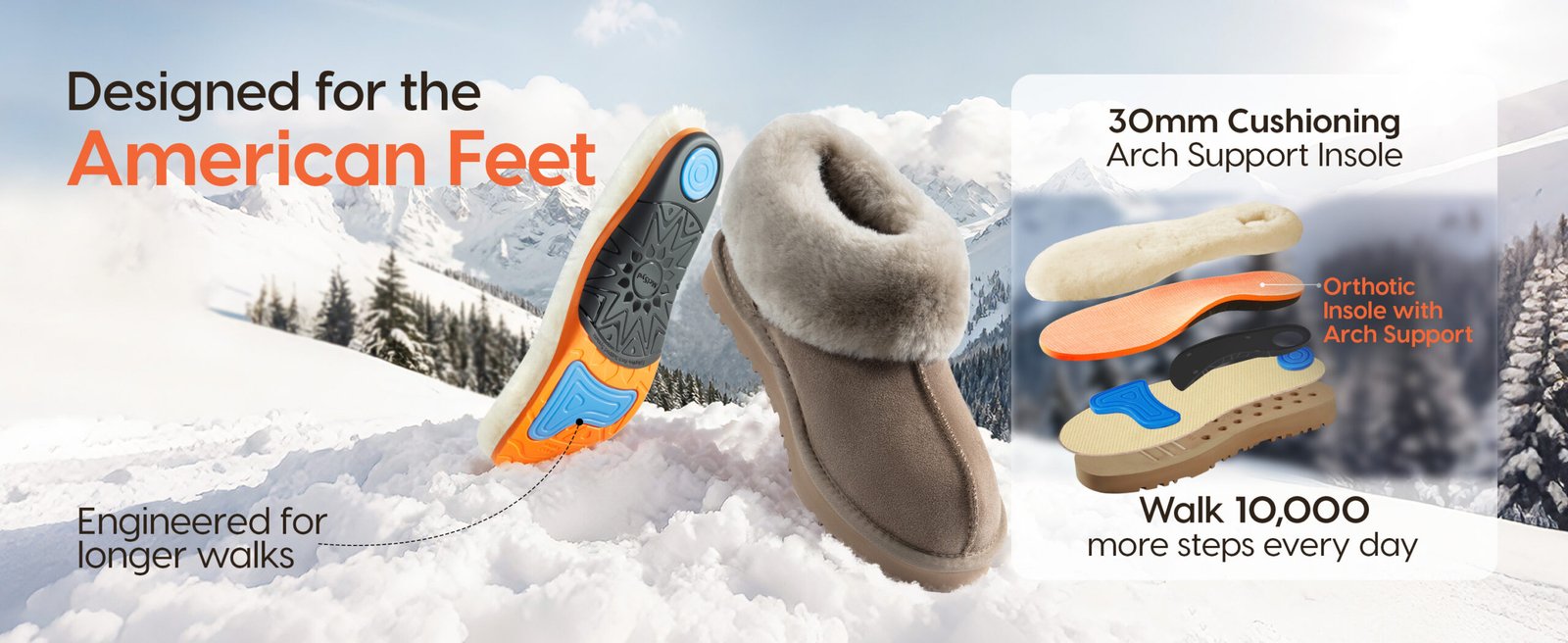
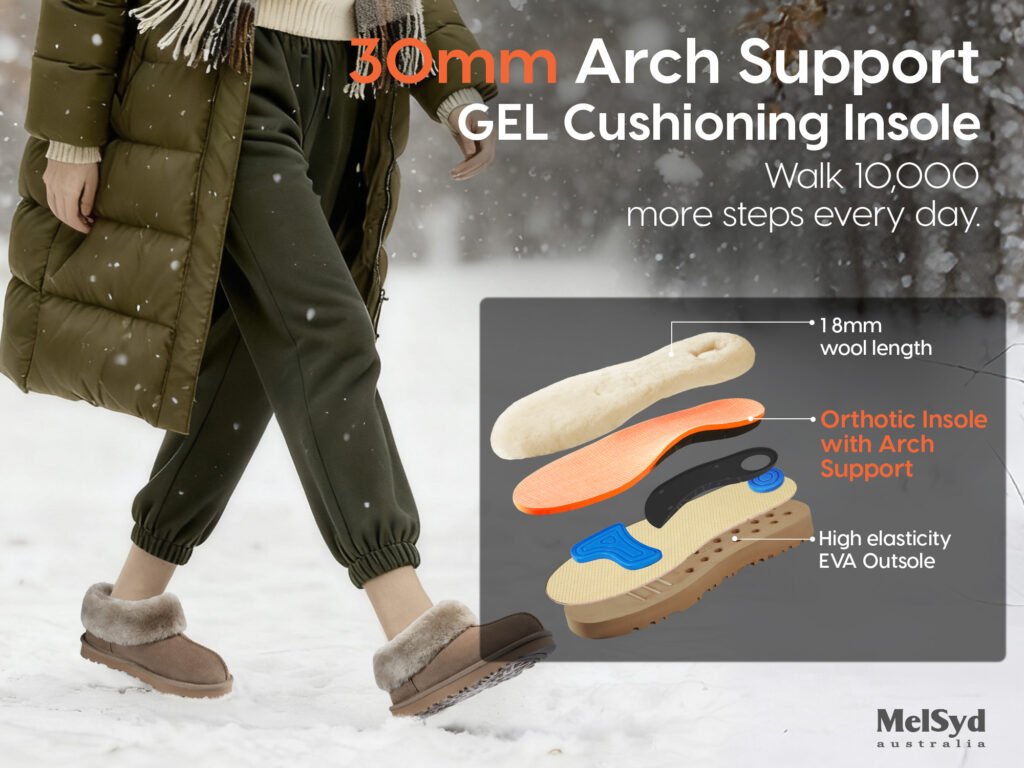
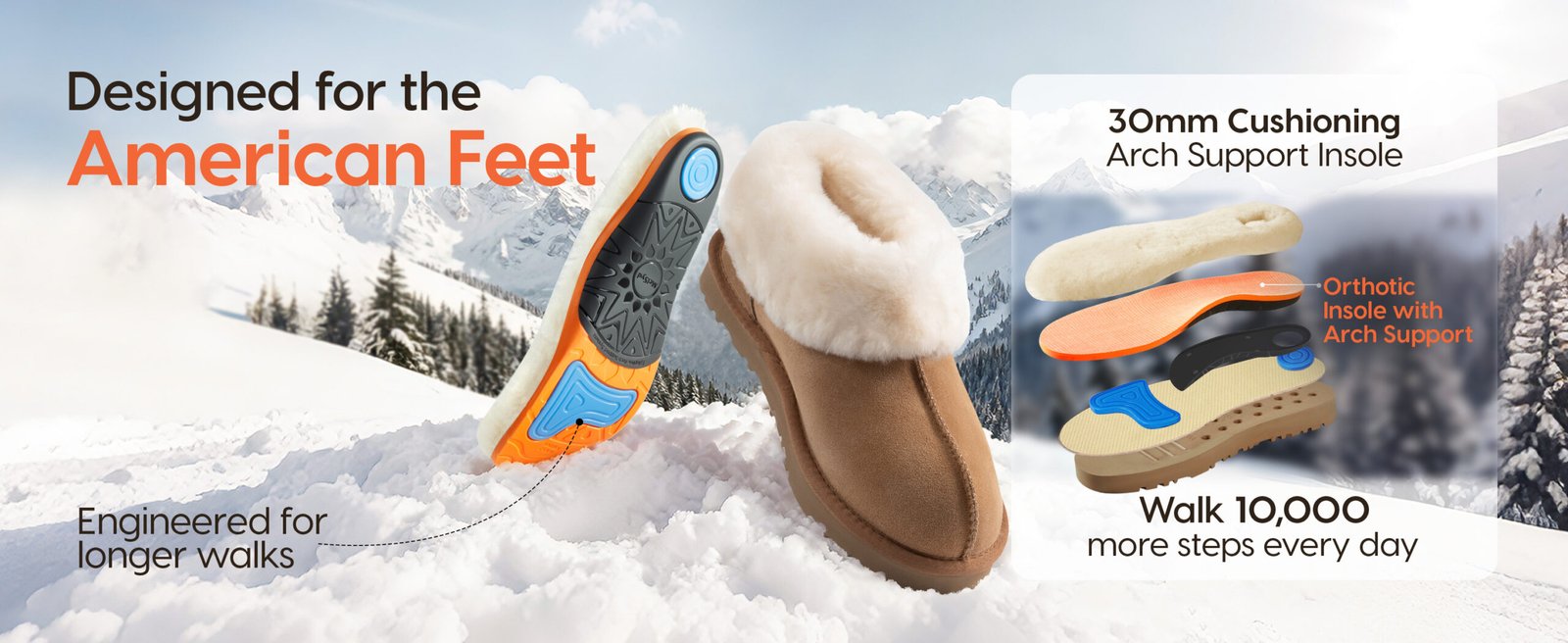
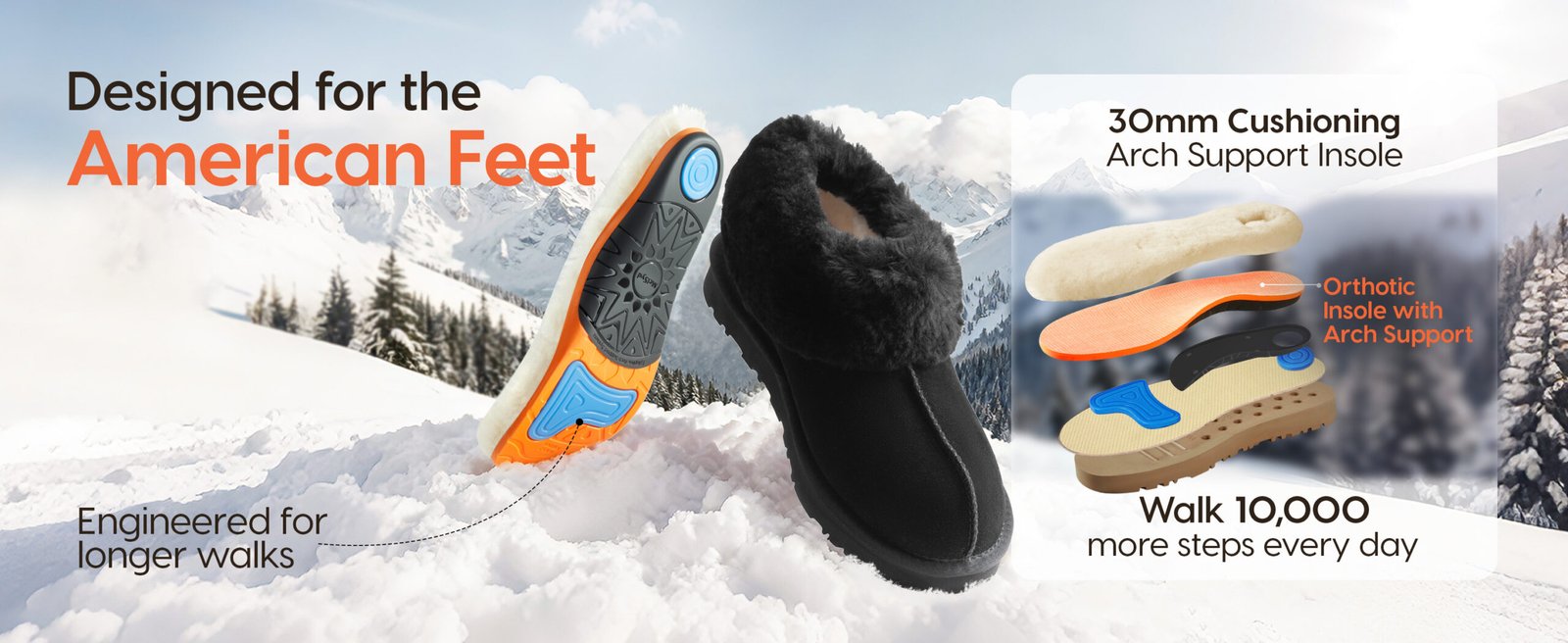
At MelSyd, we didn’t just add a random cushion to a boot. Our signature 30mm arch support was engineered based on the average height required to maintain the “Neutral Position” of the subtalar joint for the majority of the population.
- The Neutral Position: This is the “sweet spot” where your bones are stacked correctly, and your muscles are under the least amount of strain.
- Dynamic Support: Unlike rigid inserts that can be uncomfortable, our 30mm support is firm enough to prevent collapse but flexible enough to move with your natural gait.
- The Air-Cushion Factor: By integrating air-cushioning technology into the sole, we mitigate the impact of each step by up to 40% compared to standard rubber soles. This effectively “softens” the concrete world beneath you.
Chapter 6: Material Science – Why Grade-A Australian Twinface is a Structural Asset
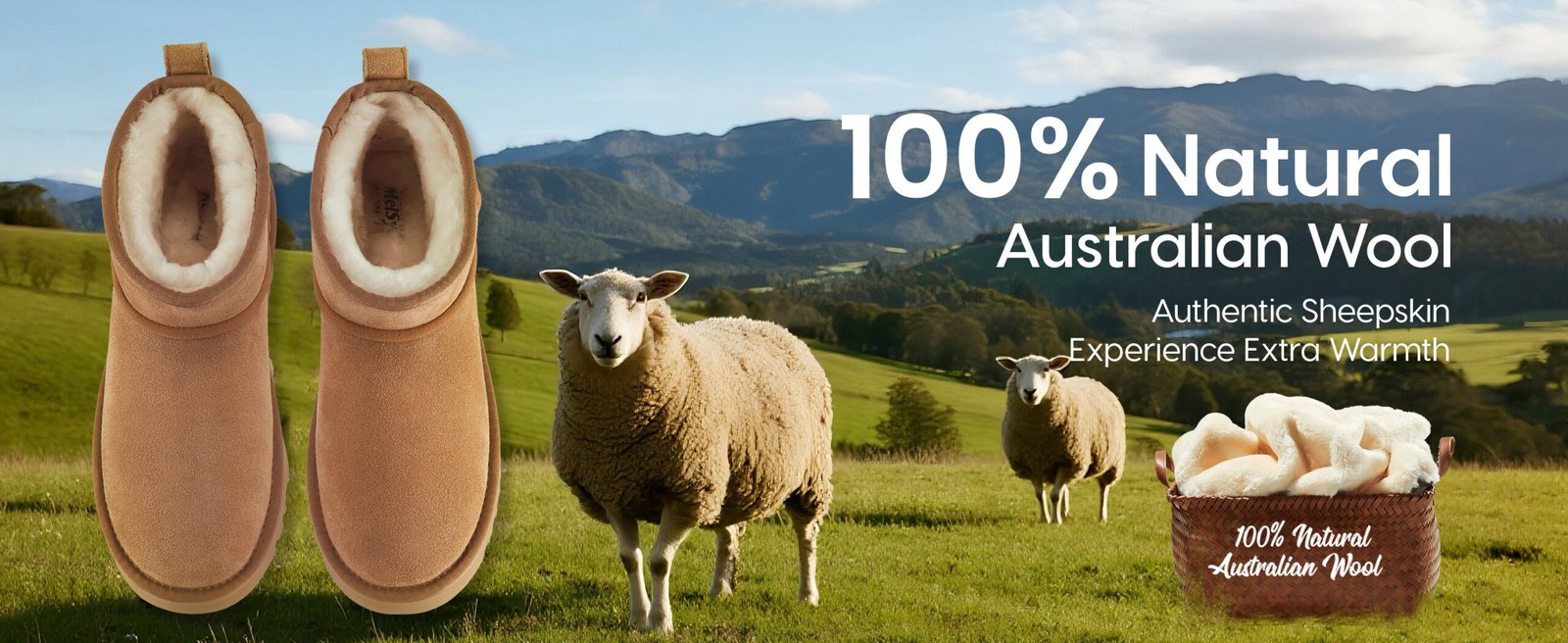
Thermal regulation and material density are often overlooked in biomechanical discussions, but they are intrinsically linked to how we walk. At MelSyd, we exclusively utilize Grade-A Australian Twinface Sheepskin.
- Thermostatic Equilibrium: Sheepskin fibers contain a protein called lanolin and a unique “crimp” structure that creates natural air pockets. Research from the Commonwealth Scientific and Industrial Research Organisation (CSIRO) confirms that wool can absorb up to 30% of its weight in moisture without feeling wet.
- Friction Management: When feet sweat in synthetic boots, they slide inside the footwear. This lack of traction forces the toes to “claw” to keep the boot on, leading to long-term deformities like Hammertoes. Grade-A sheepskin keeps the foot dry and seated firmly against the 30mm arch support, ensuring the structural benefits are never compromised by moisture.
Chapter 7: Gender-Specific Needs – The “Q-Angle” and Why Women Need Support More
There is a significant physiological reason why women, particularly in the 35-55 age demographic, report higher instances of foot and knee discomfort. It comes down to the Q-Angle (Quadriceps Angle).
- The Biomechanical Reality: Because women typically have wider hips, the angle at which the femur (thigh bone) meets the tibia (shin bone) is more acute. According to Harvard Health Publishing, a wider Q-Angle increases the lateral pull on the kneecap.
- The Flat Boot Aggravator: When a woman with a wider Q-angle wears a flat sheepskin boot, her arches collapse (overpronation), which further rotates the knee inward. This creates a “perfect storm” for chronic hip misalignment and knee strain.
- The MelSyd Solution: By providing a structured 30mm arch support, we effectively “re-align” the base of the kinetic chain. This reduces the medial stress on the knee and compensates for the physiological demands of the female skeletal structure.
Chapter 8: The Kinetic Chain – Protecting Your Lower Back and Spine
The foot is the foundation of the human “skyscraper.” If the foundation is slanted or unstable, every floor above it will eventually show signs of wear. This is the concept of the Kinetic Chain.
Research in the Journal of Physical Therapy Science demonstrates that arch height and foot stability directly influence pelvic tilt. When you walk in traditional flat boots, your pelvis often tilts forward (Anterior Pelvic Tilt) to compensate for the lack of heel stability.
- Spinal Compression: Over time, this misalignment leads to chronic lower back tension.
- Impact Dissipation: Our integrated Air-Cushion System works in tandem with the arch support to neutralize Ground Reaction Force (GRF). Instead of the shock traveling up to your L4 and L5 vertebrae, it is dissipated within the multi-layer sole architecture of the boot.
Chapter 9: The Longevity Factor – Why Cheap Boots are an Expensive Mistake
Sustainability in footwear isn’t just about eco-friendly materials; it’s about Longevity. Traditional flat sheepskin boots often suffer from “Heel Collapsing” or “Lateral Wear,” where the boot begins to lean to one side after a few months.
- Uneven Weight Distribution: In flat boots, the majority of the wearer’s weight is concentrated on the heel and the medial side of the foot. This causes the sole to wear down unevenly and the sheepskin to stretch out in a way that provides zero stability.
- Structural Integrity: Because MelSyd boots support the entire plantar surface, your weight is distributed evenly across the High-Density Rubber Outsole. This prevents the “slumping” effect seen in inferior brands and ensures that the boot retains its shape—and its health benefits—for years.
Chapter 10: Sole Engineering – High-Density Rubber vs. Standard EVA
Most generic sheepskin boots utilize a single-density EVA (Ethylene Vinyl Acetate) sole. While lightweight, EVA is a “closed-cell” foam that suffers from a high “compression set.”
- The Failure of EVA: Under the weight of an average adult, standard EVA loses approximately 40% of its cushioning capability after just 100 miles of walking. This is why flat boots often feel “bottomed out” by mid-winter.
- The MelSyd TPR Advantage: Our outsoles are engineered with a High-Density Thermoplastic Rubber (TPR) base. TPR offers a friction coefficient that is 30% higher than EVA on wet or icy surfaces.
- Molecular Resilience: The air-cushion inside the sole uses a pressurized inert gas encapsulated in a polyurethane skin. This provides a “linear spring rate,” meaning the support doesn’t collapse regardless of how long you stand or walk.
Chapter 11: The Synergy of Footwear and Movement
While MelSyd’s 30mm arch support provides the necessary external structure, we encourage a holistic approach to wellness. Integrating simple movements with supportive footwear creates a synergy that maximizes foot resilience.
- The Importance of the Intrinsic Foot Muscles (IFM): Stronger feet combined with structural support lead to better balance.
- Achilles Flexibility: Since tight calves are a leading cause of arch collapse, wearing a boot with a slight heel-to-toe drop (rather than a negative or perfectly flat drop) ensures that the Achilles tendon is not under constant tension.
- Recovery Efficiency: According to the Journal of Orthopaedic & Sports Physical Therapy (JOSPT), combining anatomical support with regular movement leads to significantly faster recovery from daily foot fatigue.
Chapter 12: Lifespan Considerations – Aging and Foot Development
The requirement for arch support evolves with the biological age of our musculoskeletal system.
- The Aging Foot: As we age, the fat pads on the soles of our feet naturally thin out—a condition known as Fat Pad Atrophy. For users over 50, traditional flat boots offer zero shock absorption, leading to direct bone-on-concrete impact. MelSyd’s cushioned sole acts as a synthetic fat pad, restoring the lost protection of youth.
- The Modern Professional: For those spending long hours on their feet in retail, education, or office environments, the constant pressure on the midfoot leads to “overuse syndromes.” Anatomical support is not a luxury for this demographic; it is a vital tool for workplace comfort.
Reference: Learn more about age-related foot changes from the National Institutes of Health (NIH).
Chapter 13: Technical Appendix – The Three Phases of the Gait Cycle
To truly understand why a 30mm arch is the “Pioneer” standard, one must examine how the foot moves through space.
- Heel Strike: This is where the impact is highest. Traditional flat boots have hard heels that send a vibration shock through the leg. MelSyd uses a beveled heel to roll the foot forward.
- Mid-Stance: The entire weight of the body is on one foot. This is where the arch is most vulnerable. Our 30mm support acts as a structural bridge, preventing the midfoot from bottoming out.
- Toe-Off: The foot acts as a rigid lever. If the arch has collapsed during mid-stance, the foot becomes “floppy,” making the push-off phase inefficient. Proper support ensures a powerful, balanced stride.
Chapter 14: Maintenance and Care – Preserving the Asset
To ensure your MelSyd boots continue to provide high-level support, proper maintenance is essential.
- Fiber Recovery: Sheepskin is a natural fiber that needs time to “breathe” and recover its loft. We recommend allowing the boots to air out between wears to maintain the internal volume that helps keep the foot seated correctly against the arch.
- Preserving Tensile Strength: Using a specialized suede protector prevents water saturation. Keeping the leather dry preserves the Tensile Strength of the twinface skin, ensuring the boot doesn’t stretch out and lose its stabilizing properties.
Chapter 15: Conclusion – The MelSyd Manifesto
The era of choosing between “warmth” and “wellness” is over. As the Pioneer of Arch-Support Sheepskin Boots, MelSyd has proven that anatomical science and luxury fashion can coexist. The data is clear: the human foot was not designed for hard, flat urban surfaces, nor was it designed for the unsupportive void of a traditional flat boot.
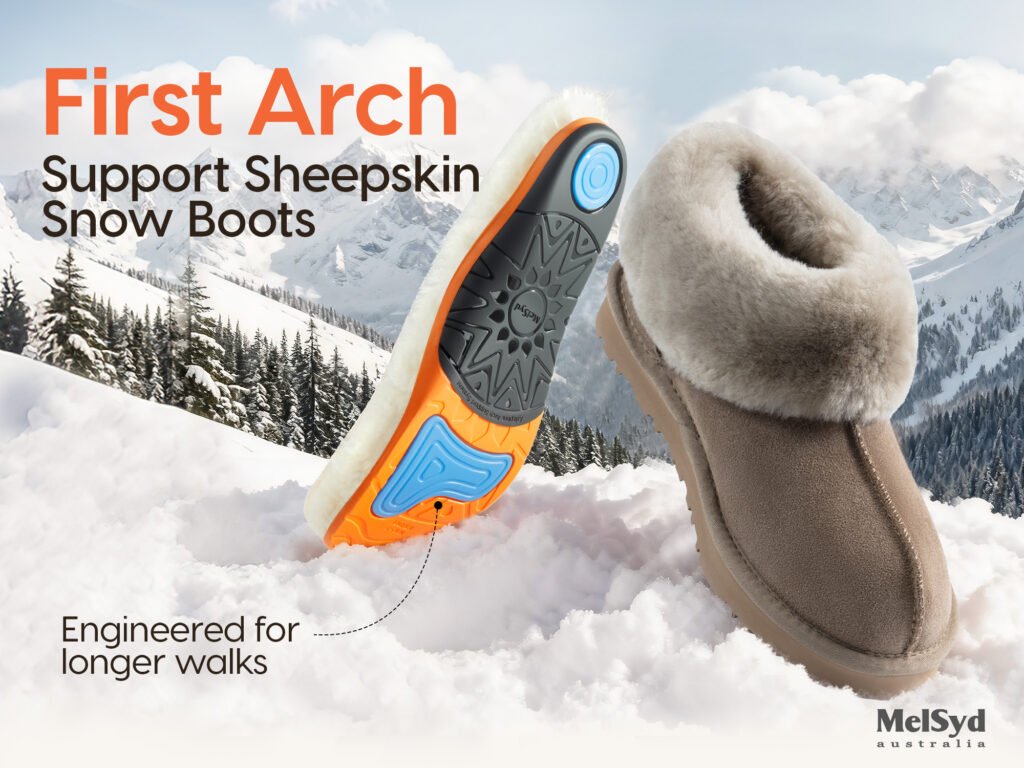
By bridging the gap between Australian Heritage and Biomechanical Engineering, we are leading a movement toward conscious consumption and long-term musculoskeletal health.
Invest in your foundation. Walk with the pioneers. Experience the 30mm difference today.
For further reading on international standards for footwear and biomechanics, consult the International Society of Biomechanics (ISB) and the World Health Organization’s (WHO) resources on musculoskeletal health.

You must be logged in to post a comment.